Flexographic Printing Plant Setup
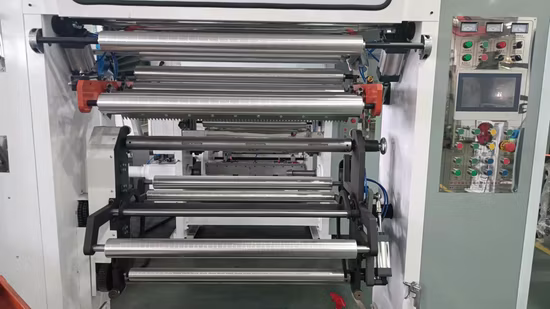
Delflow Industries Ltd. helps manufacturers, brand owners and packaging converters set up turn-key flexographic printing plants that are efficient, scalable and compliant. From site selection and layout design to equipment procurement, installation, staff training and commissioning — we deliver a complete, documented, ready-to-run factory tailored to your production volumes, product mix (sachets, pouches, labels, cartons, bag-in-box, shrink sleeves) and budget.
Our specialized service is tailored to meet the specific requirements of your business. Whether you are starting from scratch or looking to enhance your current operations, our team can provide invaluable insights and practical recommendations. From choosing the right machinery to streamlining production processes, we offer end-to-end support to ensure that your printing plant setup is optimized for success.
Why choose Delflow
End-to-end expertise: engineering, process design, procurement, installation, QA/QC and training under one project management umbrella.
Practical, plant-floor focus: we design for maintainability, uptime and operator ergonomics — not just theory.
Compliance & quality by design: ISO-aligned workflows, GMP / food-contact material handling, and traceability systems built in.
Cost-effective scaling: modular layouts and equipment specifications that let you scale from pilot to high-volume production without costly reworks.
Our Service Offering
Feasibility & Business Case
Market and product mix assessment (substrates, inks, coatings).
Production capacity modelling and ROI estimates.
CapEx/Opex projections and sensitivity analysis.
Site Selection & Civil/Utilities Assessment
Facility suitability (floor loading, drainage, zoning).
Utilities audit: power, compressed air, water, waste, ventilation, HVAC, steam (if needed).
Permits, environmental impact brief and local compliance checks.
Process & Layout Design
Detailed plant layout (material flow, receiving, storage, printing, converting, QC, dispatch).
Lean flow, 5S and safety zoning incorporated.
Floor plan for future expansion and isolation of dust/ink aerosols.
Equipment Specification & Procurement
Flexo printing presses (web widths, print stations, in-line vs. stack, UV/EB curing options).
Ancillaries: unwind/rewind stands, corona/primer systems, chill rollers, chill drums, laminators, slitter/rewinders, pouch machines, bagmakers, servo unwinders, automatic splicing.
Ink systems: closed ink circulation or manual, ink mixing, storage tanks.
Drying/curing: hot air, IR, UV, EB — specified to substrate and throughput.
Inspection & rewind systems: in-line vision inspection, web guiding, tension control.
Supporting equipment: chillers, compressors, dust extraction, solvent recovery (if solvent-based inks), laboratory testing equipment.
Supplies & Consumables
Recommendation on substrates, anilox selection, doctor blades, plates, sleeves, adhesives and inks.
Spare parts package and recommended reorder levels.
Installation, Commissioning & Validation
Mechanical, electrical and control installation by certified technicians.
FAT/SAT procedures, process validation, run-off acceptance criteria.
Trial production runs and throughput tuning to meet agreed KPIs.
Quality Systems & Traceability
QC laboratory setup (tensile, adhesion, color matching, rub resistance, barrier testing).
Standard Operating Procedures (SOPs) and QC checklists.
Ink and substrate lot traceability; batch coding and CI/serial number workflows.
Support for ISO 9001 / FSSC 22000 implementation if required.
Automation & Controls
PLC & HMI design, SCADA options and Industry 4.0 readiness (data capture, OEE dashboards).
Integration with ERP/WMS for material planning and traceability.
Staffing, Training & Handover
Recruitment profile for operators, technicians, QA and maintenance staff.
Hands-on operator and maintenance training (SOPs, preventive maintenance, troubleshooting).
Training materials, competency assessments and certification.
After-Sales Support & Continuous Improvement
Warranty support, service contracts and remote diagnostics.
Ongoing process optimisation, ink/consumable tuning, and waste reduction programs.
Typical Production Workflow (high level)
Raw material receiving, inspection and storage (FIFO).
Web preparation — unwind, web cleaning, corona/primer.
Printing stations — color registration, anilox and plate set-up.
Drying/curing and inline quality inspection.
Lamination (if required) and finishing (slitting, pouch forming, pouch sealing).
Final QC, packaging, coding/inspection and dispatch.
Key Technical Considerations
Substrate compatibility: flexo setup differs for BOPP, CPP, PET, paper, foil and laminated constructions. We specify inks/adhesives and drying accordingly.
Ink type & curing: water-based, solvent, UV or EB — each has different environmental controls, safety and recovery requirements.
Color management: spectrophotometer workflows, CMYK + spot adjustments, standardization across shifts and presses.
Tension & web control: servo drives, dancer rolls and precision splice tables for minimal downtime.
Environmental & safety controls: ventilation for solvent odors, explosion-proof fitouts when required, waste handling and spill containment.
Layout & Facility Requirements (example)
Space: depends on throughput — typical mid-size plant: 1,500–5,000 m² including storage and dispatch.
Power: dedicated supply per press (single/multiple 415V/3-phase), backup generator sizing per critical loads.
Compressed air: properly dried and filtered; pressure and flow sized for pneumatic devices.
HVAC: dust control and temperature stability for ink performance and web dimensional stability.
Flooring & loading: smooth, flat, floor load ratings for heavy machinery and forklift traffic.
Staffing & Competency Suggestions
Plant Manager (1) — production, safety & budgets
Production Supervisors (1 per shift per 2–4 presses)
Press Operators (2–4 per press depending on automation)
Maintenance Technicians (electrical & mechanical)
Quality/Process Engineers (1–2)
Ink/Color Technicians (1)
Warehouse & Logistics (based on volume)
We provide job descriptions, interview templates and on-the-job training plans.
Quality Assurance & Regulatory Compliance
Build in GMP practices for food contact packaging: raw material controls, cleanliness regimes and allergen segregation where needed.
Support documentation for client audits (traceability, certificates of analysis, process validation).
Recommend and help implement ISO 9001 quality management systems and FSSC/ISO 22000 for food packaging operations.
Typical Project Timeline (illustrative)
Feasibility & design: 3–6 weeks
Procurement & delivery of equipment: 8–16 weeks (dependent on suppliers)
Civil works & utilities preparation: 4–8 weeks (parallel)
Installation & commissioning: 4–6 weeks
Trial runs & handover: 1–3 weeks
Total approximate: 3–6 months from project kick-off for a mid-sized plant (timelines vary by scope and supply chain).
Estimated Cost Components (guidance)
Presses & major equipment: largest CapEx item (varies widely by brand, width, stations, and automation).
Building/utility upgrades: power, HVAC, compressed air.
Installation & commissioning.
Spare parts and consumables startup kit.
QC lab & testing equipment.
Training and documentation.
We provide a transparent, line-item CapEx and 3-year Opex projection during the feasibility stage tailored to your chosen scale.
Environmental & Waste Management
Solvent recovery and responsible disposal plans if solvent inks are used.
Recycling programs for liner waste and rejected runs.
Energy efficiency options (LED/UV/EB vs. hot air) and closed-loop chillers to reduce operating costs.
Risk Management
Detailed HAZOP for solvent systems and press operations.
Redundancy for critical systems (spares, backup power).
Preventive maintenance schedules, spares kits and critical spares list.
Operator safety training and PPE programs.
Value Added Services from Delflow
Pilot production to qualify products before full-scale launch.
Color matching & brand compliance — ICC profiles and digital proofs.
Lean manufacturing workshops for waste reduction and throughput optimization.
Supply chain alignment — assisting procurement of substrates and inks locally to reduce lead times.
Sustainability consulting — options for recyclable substrates and low-VOC ink systems.
Deliverables you receive
Detailed project plan, Gantt schedule and budget.
Full equipment specification and procurement support.
Mechanical & electrical installation packages.
SOPs, QC specs, training manuals and operator work instructions.
Commissioning report and final acceptance test certificates.
Warranty and service/support plan.
Example Success Stories (how we measure success)
Reduced make-ready time by 40% after process layout redesign.
Improved color consistency across shifts achieving ΔE < 1.5 for brand colors.
Increased OEE by 18% through automation of web handling and inline inspection.
(We’ll share anonymized case summaries matched to your product mix during the proposal stage.)
Next steps — how Delflow works with you
Quick consult (no charge) — 30-minute call to discuss volumes, substrates and target markets.
Feasibility proposal — scoped recommendations, preliminary budget and timeline.
Full project proposal — fixed scope, costs, equipment list and milestones.
Project execution — turnkey delivery, training and handover.